How to Wear Vintage Sweater Clips on a Cardigan This Fall, Plus an Easy DIY Version


Drape a cardigan over your shoulders on a crisp October morning and it usually slides down your back before you reach the front door. Button it all the way up and the neckline can feel stiff or bulky. That exact annoyance is what vintage sweater clips were built to solve, and learning how to wear sweater clips cleanly takes about thirty seconds once you know where to anchor the jaws.
In this guide, I walk you through the fastest snag-free way to fasten vintage sweater clips onto a fall cardigan, five modern ways to style them so they never read as a costume, and what real 1950s pieces cost on today’s marketplaces. If you have a single mismatched clip-on earring sitting in a drawer, you will also find an easy DIY version you can put together in ten minutes.
Gilt Lane may earn a commission from links on this page, at no extra cost to you. See our affiliate disclosure for details.
1. How to Wear Vintage Sweater Clips on a Cardigan Without Snagging the Knit
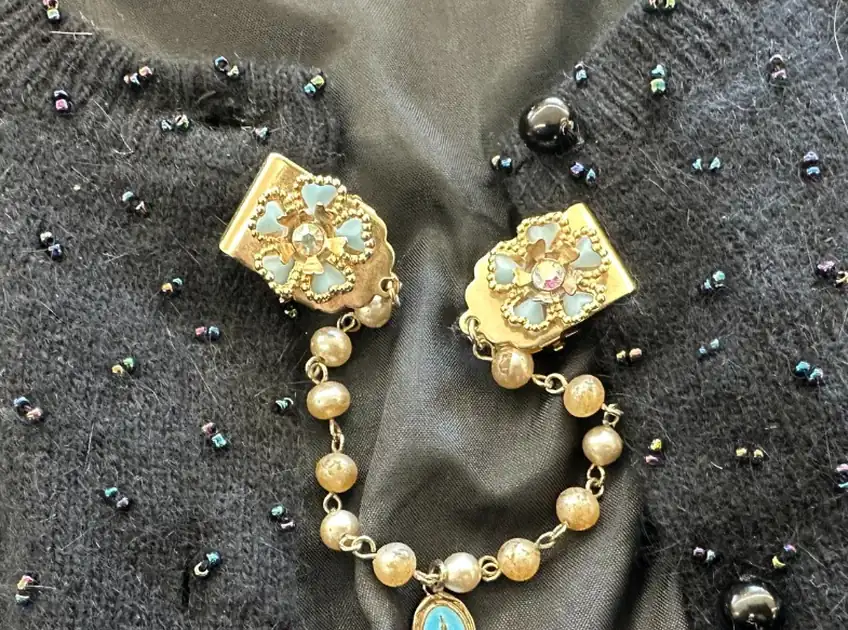
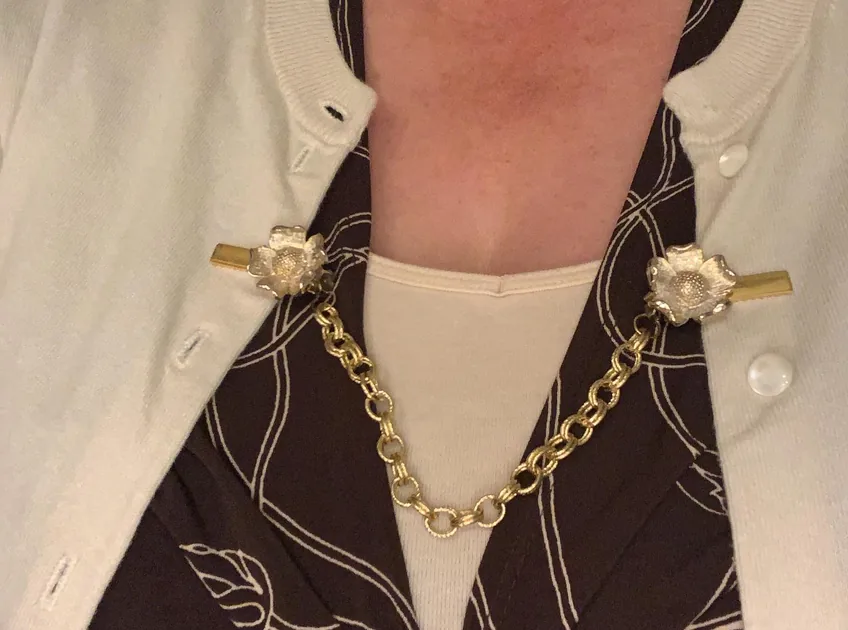
The fastest way to wear a sweater clip is across the two front edges of an open cardigan, right near your collarbone. A sweater guard (the traditional mid-century name for two decorative clips joined by a short chain) holds the knit together while letting the lower half hang open.
Put the cardigan on first, then test the chain length before you clamp anything down. If you pull the two sides too tight, the metal jaws tug at individual yarn loops every time you move your arms. Aim for a gentle U-shaped drape in the chain so the sweater carries its own weight.
Find the placket. Locate the thicker ribbed band where the buttons and buttonholes sit. Never clip onto the thin body knit beside it.
Set the height. Line both clips up about one to two inches below your collarbone so the chain frames your neckline cleanly.
Open the jaws fully. Press the spring lever all the way open before sliding the knit inside, rather than forcing the teeth over the edge.
Check the slack. Raise both elbows slightly. If the chain pulls straight and flat, move the clips half an inch closer together.

2. The Two-Layer Pinch Rule for Delicate Knits and Silk
Old metal alligator clips often have tiny serrated teeth that grip well on thick 1950s wool but chew right through modern fine-gauge cashmere, rayon, or silk blends. Before I put any vintage clip on a sweater I care about, I run a fingertip along the inside of the jaws to feel for burrs or rough plating.
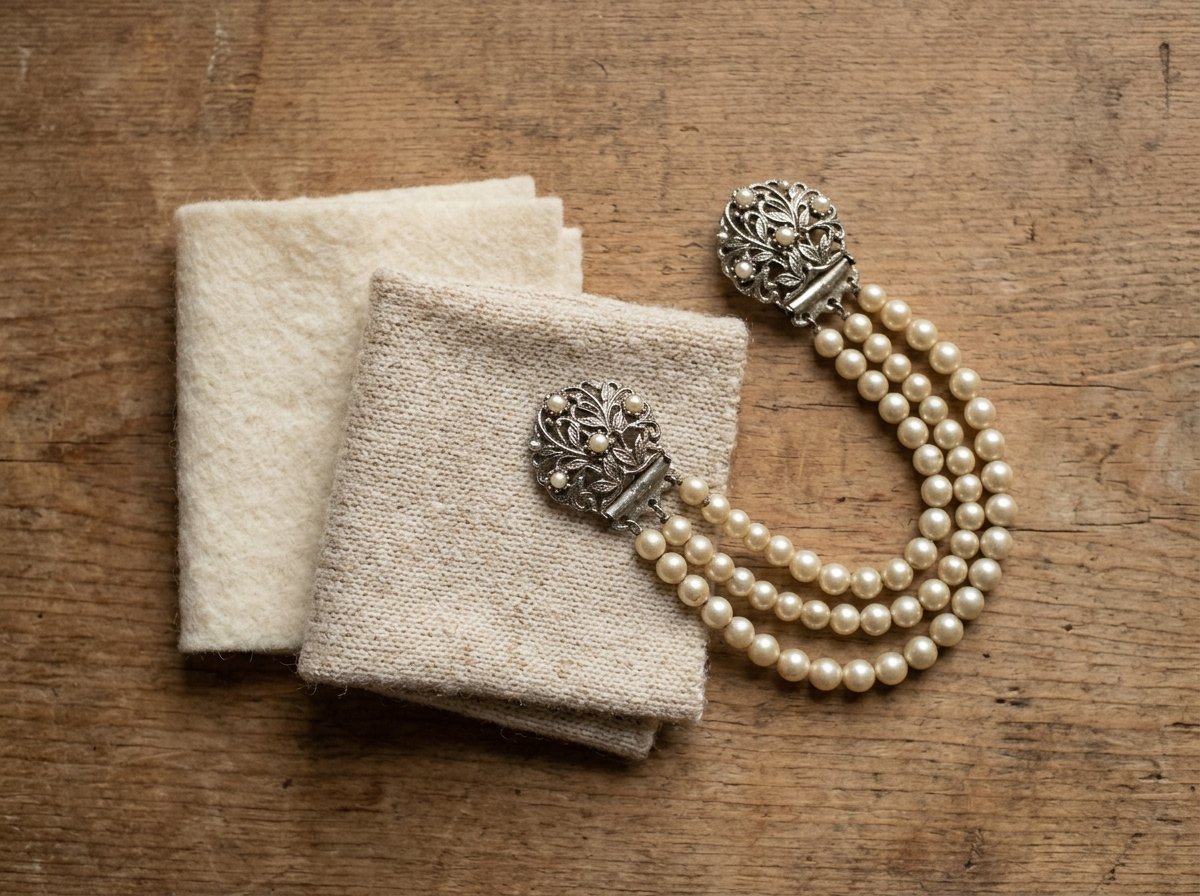
Metal hardware can also stress fragile synthetic blends over time, a wear issue documented in National Park Service synthetic fiber conservation guidance. When a fabric feels slippery or thin, slip a tiny folded square of wool felt or soft grosgrain ribbon behind the placket so the metal teeth bite the buffer instead of your knit.
Always clip across two layers of fabric, such as a doubled placket or a folded hem, never a single sheer layer.
On silk or thin knits, tuck a hidden half-inch felt pad under the back jaw so the metal teeth never touch bare yarn.
Remove the clip by squeezing the lever fully open. Never tug a closed clip off a sweater.
3. Five Modern Sweater Clip Styling Ideas Beyond the Cardigan
Good sweater clip styling works best when the rest of your outfit stays quiet and current. Pinterest’s Pinterest Predicts 2026 trend report named “Brooched” as a standout movement, noting that vintage pins and heirloom clips are showing up on everything from tailored collars to men’s knitwear. You do not need a poodle skirt to wear a 1950s guard.
- Shirt collar chain: Clip each end to the points of a crisp white or chambray button-down collar under a tweed blazer for a dark academia finish.
- Waist cinch at the back of a dress: Pinch two inches of loose fabric at the small of your back on a boxy linen or cotton dress and secure it with a sturdy metal clip.
- Shoulder-draped sweater hold: Toss a crewneck or cardigan over a plain tee and anchor the front edges near the collarbone so it stays put while you walk.
- Shawl or blanket-scarf clasp: Fasten the two front panels of a heavy wool scarf over a wool coat lapel so wind does not blow the ends apart.
- Jacket lapel bridge: Connect both lapels of an unbuttoned structured vest or lightweight trench with a longer chain guard for an unexpected metal accent.

4. Which Clip Size and Weight Fits Your Fall Garment
Weight matters more than pattern. A heavy prong-set rhinestone guard that looks right on a chunky wool cardigan will yank a thin cotton placket downward and make the neckline gape. Check both the span of the chain and the tension of the spring before committing a clip to a specific sweater.
Shorter chains around four to six inches keep cardigan edges close together for a neat, buttoned-up line. Longer specialty chains (some 1950s guards run much longer for draped shawls) work better over heavy coats or wide boat-neck wraps where you want visible movement.
Choose a lightweight hollow-back gilt leaf or small faux pearl clip with smooth or padded jaws.
Go for a heavier double-chain rhinestone guard or a wide-opening alligator jaw that clears thick ribs.
Use a flat, sturdy bar-style cinch clip with strong spring tension so it holds when you sit down.
5. Sweater Clips and Sweater Guards History From the 1950s to Today
Looking at sweater clips and sweater guards history explains why so many surviving pieces share the same look. Sweater guards surged in the 1950s, when twinsets and shoulder-draped cardigans were everyday wear and women needed a neat way to keep a cardigan from slipping off while carrying books or a handbag.
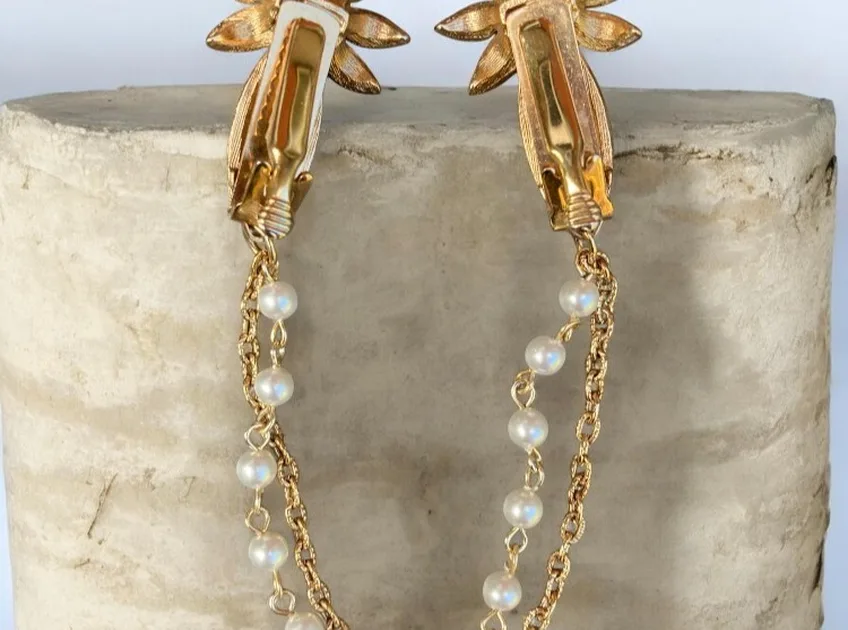
A true 1950s sweater clip is easy to separate from other vintage clips once you flip it over. A dress clip (popular in the 1930s) has a wide, flat hinged flap on the back designed to clamp onto a neckline, and a fur clip uses two long sharp prongs built to pierce thick pelts. A sweater guard almost always pairs two smaller spring-loaded alligator jaws linked by a single or double chain. For more context on makers and plastics from this period, browse our mid-century and retro jewelry hub.
6. What Vintage Sweater Clips Cost and How to Spot Quality
The values on this page are general ranges from public sales and listings. They are not an appraisal. For insurance, resale, estate or legal purposes, get a written appraisal from a certified appraiser, for example a member of the American Society of Appraisers or the National Association of Jewelry Appraisers.
Most 1950s sweater guards are costume jewelry made from gilt (gilded base metal) rather than solid karat gold, which keeps them approachable for everyday wear. If a seller describes a piece as gold-filled or gold-plated, it helps to know the legal definitions laid out in the FTC Guides for the Jewelry Industries, where gold-filled requires a mechanically bonded layer of at least 10k gold rather than a thin wash.
Across current US listings, prices split cleanly into three bands. New retro-style zinc alloy clasps and multi-packs run around $5.69 to $15.99 on Etsy or $8.09 to $13.84 for a four-pack to six-pack at Walmart. Unsigned 1950s gold-tone, faux pearl, and twisted rope chain guards typically sit around $18.99 to $37.98 on Etsy and $21.99 pre-owned on eBay, while aurora borealis rhinestone guards span $13.12 to $49.00 on eBay. Signed mid-century pieces, such as a 1950s Trifari gold-tone leaf guard, list around $18.00 to $40.00 on Etsy depending on condition and plating wear.
New vintage-style zinc alloy clasps or multi-packs for testing placements and waist cinching.
About $6 to $16 (Etsy / Walmart asking)Unsigned 1950s gold-tone, faux pearl, or twisted rope sweater guards with intact spring jaws.
About $19 to $38 (Etsy / eBay listings)Signed 1950s costume (such as Trifari leaf guards) or bright aurora borealis rhinestone double-chain guards.
About $18 to $49 (Etsy / eBay listings)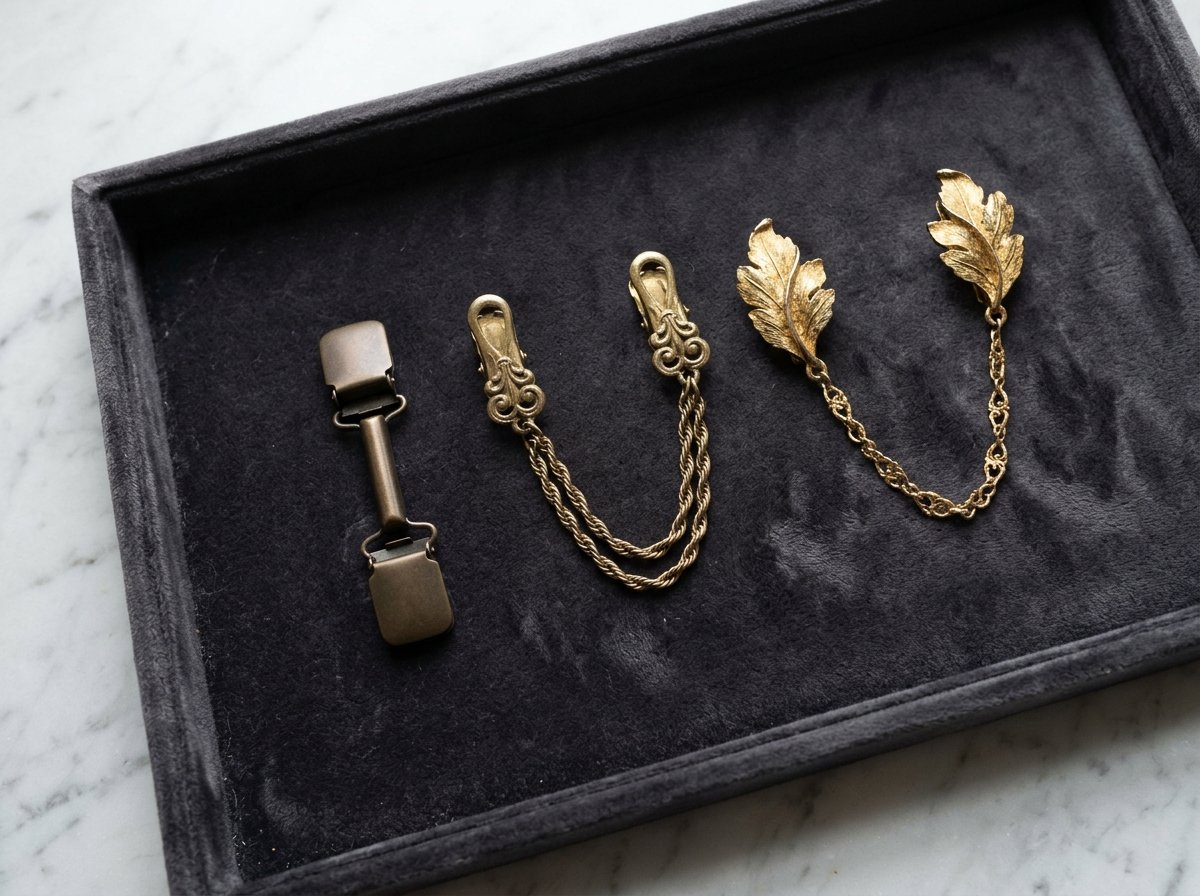
7. Easy DIY Sweater Clips Made From Vintage Clip-On Earrings
Making diy sweater clips is one of the smartest ways to rescue vintage clip-on earrings that pinch your ears after an hour. Because clip-on backs already have a hinged spring paddle, you do not need to solder anything. You only need a pair of clip-on earrings, two 6 mm jump rings, a five-inch length of brass or silver-tone chain, and two pairs of flat-nose jewelry pliers.
If you prefer to start from scratch with loose vintage buttons or cabochons, you can buy Bead Landing alligator clip findings at Michaels (about 4 cm by 1 cm in rhodium-finished iron, priced around $5.84 per 36-clip pack). Twist each jump ring open sideways with your pliers rather than pulling the ends apart, loop it through the hinge gap of the earring back and the last link of your chain, and twist it closed until the seam sits flush.

8. How to Clean and Store Vintage Rhinestone and Pearl Sweater Clips
Cleaning and testing products can damage a piece and can hurt you. Work in a ventilated space, wear gloves, never mix products, keep everything away from children and pets, and leave acid testing, soldering and repairs on valuable pieces to a jeweler.
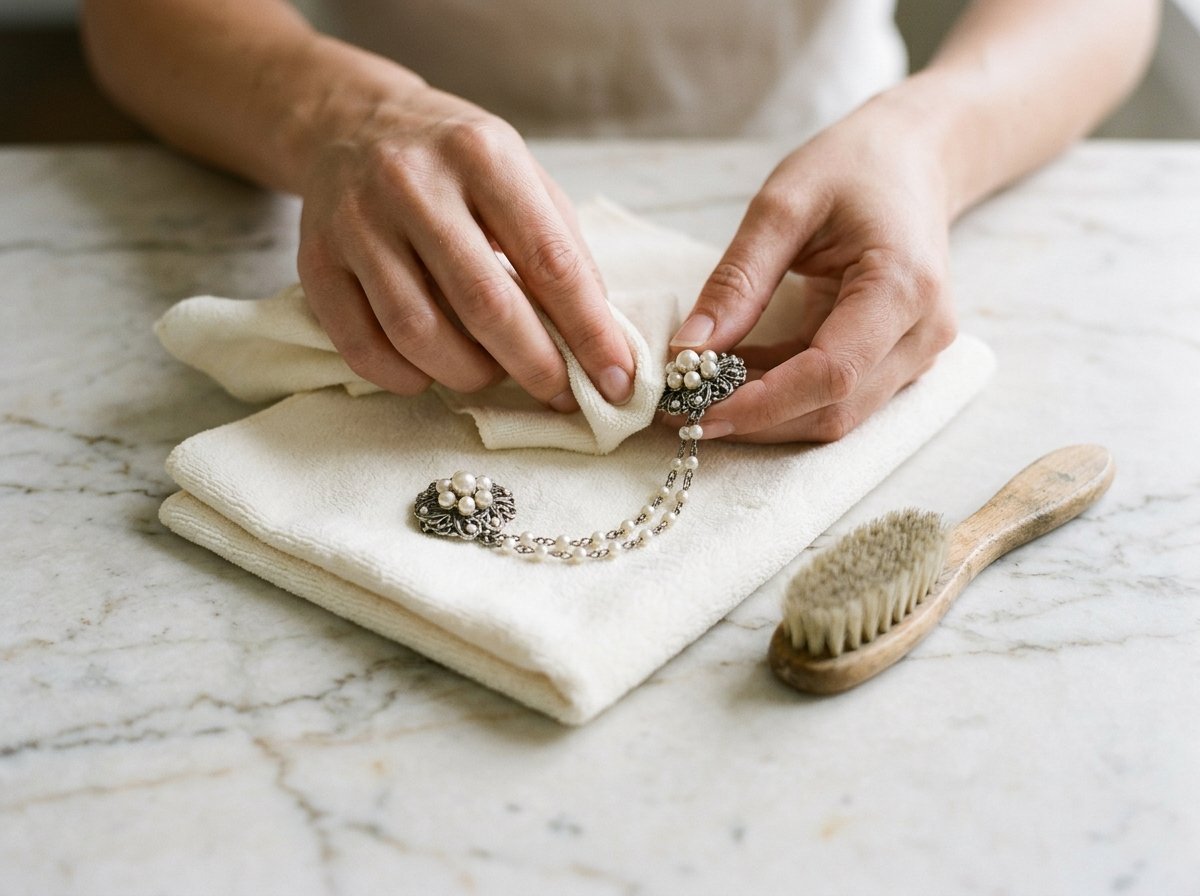
The fastest way to ruin a 1950s rhinestone or faux pearl sweater guard is to drop it into a bowl of warm soapy water. Many mid-century rhinestones are foil-backed and glued into their settings; moisture seeps under the foil and turns bright crystals gray or black permanently. As outlined in vintage costume jewelry care guidelines from Carole Tanenbaum, wipe metal and stones lightly with a barely damp cotton swab or microfiber cloth, then set the clip face down on a dry towel so any trace of moisture drains away from the stone settings.
9. Five Common Mistakes That Make a Sweater Clip Look Dated
A vintage clip only reads like a costume when you stack too many retro cues on top of it at once. Pair a 1950s pearl guard with a floral cardigan, a pearl necklace, and matching stud earrings, and the outfit jumps straight into theater territory. Swap the floral knit for a solid dark cardigan over a plain cotton tee, leave your neck bare, and the exact same clip looks sharp and current.
Placement is the other quick giveaway. Clipping too low near the middle of your ribs pulls the cardigan into an awkward hourglass pinch that fights a relaxed modern cut. Keep the clips near the top two button positions so the sweater opens cleanly below the chain.
I used to skip my grandmother’s rhinestone sweater guard because it felt too dressy for daytime. The day I clipped it onto a plain charcoal crewneck cardigan with straight blue jeans and loafers, it turned into the piece people asked about most.
Frequently Asked Questions About Vintage Sweater Clips
Are sweater clips only for cardigans?
No. Cardigans are the classic home for a sweater guard, but you can also clip one across the tips of a button-down shirt collar, use it to hold a heavy wool shawl over a coat, or fasten it at the back of a loose dress to add gentle shape at the waist.
Can men wear sweater clips?
Yes. Simple chain guards in brushed brass, silver-tone metal, or geometric mid-century shapes work cleanly across a collared shirt under a blazer or on a shawl-collar cardigan. Keep the metal finish matched to your watch case or belt buckle so the styling feels intentional.
How do I choose the right size sweater clip?
Match the clip weight and jaw opening to the thickness of your fabric. Lightweight gilt leaves or small pearl clips suit fine-gauge knits and shirt collars, while heavier double-chain rhinestone guards and wider spring jaws grip chunky wool cardigans and thick winter shawls without popping off.
Can I wear sweater clips with modern outfits?
Yes. The easiest rule is to pair one vintage clip with plain modern basics like a solid wool cardigan, a white crew tee, and straight jeans. Skip other neck jewelry so the chain drape stands alone rather than competing with a pendant or choker.
What is the difference between sweater clips, dress clips, and fur clips?
A sweater clip links two small spring-loaded alligator jaws with a chain to bridge two edges of fabric. A 1930s dress clip is a single piece with a wide, flat hinged back flap, while a fur clip uses two long pointed prongs built to grip thick fur or heavy wool.
How do you keep a vintage sweater clip from snagging or falling off?
Always clip onto a doubled placket rather than thin single-layer knit, and leave a soft U-shaped dip in the chain so arm movement does not tug the teeth. On delicate silk or cashmere, tuck a tiny square of wool felt behind the fabric before closing the jaws.
Start With One Cardigan You Already Own
You do not need a whole new fall wardrobe to bring vintage sweater clips into your weekly rotation. Pull one solid cardigan out of your closet, test the Two-Layer Pinch Rule at collarbone height, and see how much cleaner an open knit sits when it stays where you put it.
Save this guide to your vintage jewelry or fall outfit board so you have the fit rules, price bands, and thrift-store checklist handy the next time you spot a 1950s guard in a glass case.
Thrift-Store Sweater Clip Quick Check